Gog and Magog in the Qur’an: Understanding Yaʾjūj and Maʾjūj

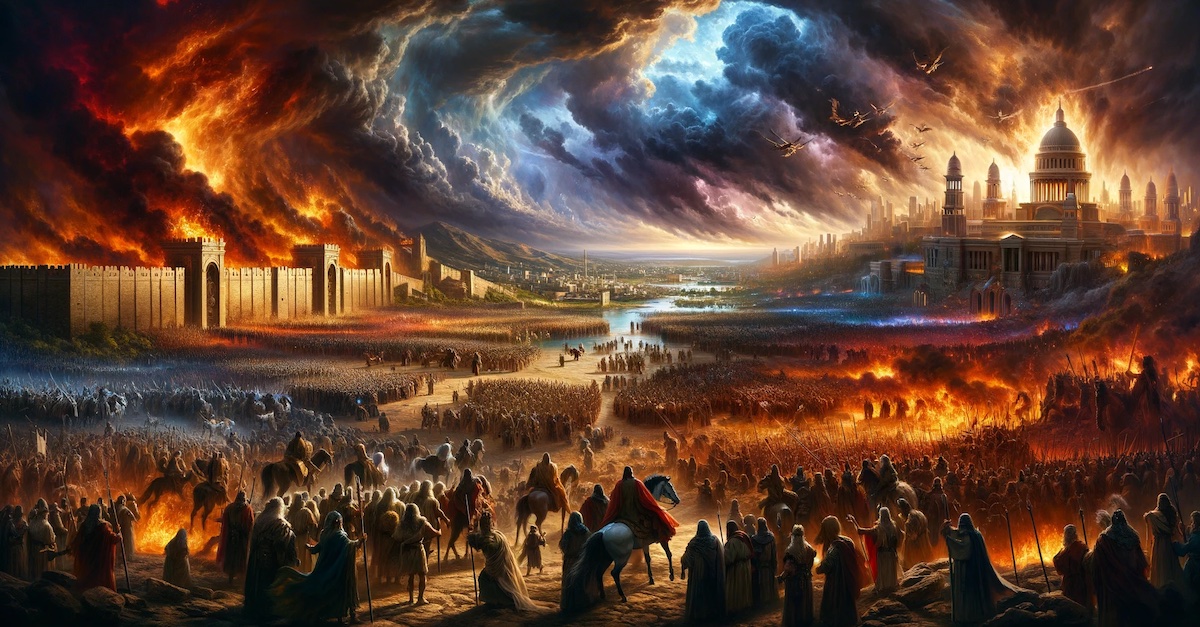
Among the mysterious peoples mentioned in the Qur’an are Ya’juj and Ma’juj, often translated as Gog and Magog. Their story appears in connection with a powerful ruler who built a barrier to restrain them. The Qur’an presents them as a people whose corruption and eventual release are tied to the unfolding of the final events before the Hour.
By examining the Qur’anic passages carefully, we can understand the essential points it teaches about them.
The Story of Dhul-Qarnayn and the Barrier
The main account of Gog and Magog appears in the story of Dhul‑Qarnayn.
In the Qur’an, Dhul-Qarnayn travels across regions of the earth and encounters a people who struggle with the harm caused by Gog and Magog.
“They said, ‘O Dhul-Qarnayn, indeed Yaʾjūj and Maʾjūj are corrupters in the land. So may we pay you a tribute that you might make between us and them a barrier?’”
— Qur’an 18:94
The Qur’an describes these people as causing corruption on earth, which led the community to seek protection.
Building the Barrier
Instead of accepting payment, Dhul-Qarnayn tells the people that what Allah has granted him is better than any tribute.
He asks them to assist him in building a powerful barrier.
“Bring me blocks of iron… until he leveled them between the two mountains.”
— Qur’an 18:96
The construction involved:
- Iron blocks
- Molten copper poured over them
The result was a structure so strong that Gog and Magog could neither climb over it nor break through it.
“So they were unable to scale it, nor were they able to pierce it.”
— Qur’an 18:97
This barrier prevented their corruption from spreading further.
A Temporary Restraint
After the barrier is completed, Dhul-Qarnayn acknowledges that its existence ultimately depends on Allah’s will.
“He said, ‘This is a mercy from my Lord. But when the promise of my Lord comes, He will level it.’”
— Qur’an 18:98
This statement reveals an important principle:
the barrier is not permanent.
At a time known only to Allah, it will be removed.
Their Release Before the Hour
The Qur’an refers again to Gog and Magog in a passage describing events leading to the final Hour.
“Until when Yaʾjūj and Maʾjūj are released, and they descend from every elevation.”
— Qur’an 21:96
This verse indicates that their release will coincide with the approach of the final events before the Day of Judgment.
The imagery suggests vast numbers spreading rapidly across the earth.
What the Qur’an Emphasizes
While the Qur’an mentions Gog and Magog only briefly, several themes emerge clearly.
1. They Are a Human People
The Qur’an refers to them as a community that spreads corruption on earth.
Their description suggests a large population capable of widespread influence.
2. Their Power Is Limited by Allah
Despite their destructive capacity, they were restrained by the barrier built with Allah’s permission.
This reminds readers that all power ultimately belongs to Allah.
3. Their Release Is Part of the Final Signs
Their emergence is connected to events leading to the Hour.
This shows that history moves toward a divinely determined conclusion.
Lessons From the Story
The story of Gog and Magog carries broader lessons beyond the identity of a specific people.
It highlights:
- The reality of corruption in human societies
- The role of righteous leadership in protecting communities
- The temporary nature of worldly power and barriers
- The certainty that Allah’s promises will unfold in their appointed time
The Qur’an’s Focus on the Bigger Picture
Rather than providing detailed speculation about who Gog and Magog are or where they live, the Qur’an directs attention toward the larger reality:
Human history unfolds under divine knowledge and authority.
The emergence of powerful forces—whether destructive or protective—is part of the unfolding of Allah’s plan for the world.
Preparing for the Final Return
Ultimately, the story of Gog and Magog connects to the broader Qur’anic teaching about the end of the world.
All events lead toward the Hour, when every soul will be gathered and judged with perfect justice.
“Every soul will taste death, and you will only be given your full compensation on the Day of Resurrection.”
— Qur’an 3:185
Continue Exploring the Signs of the End
To understand how the Qur’an describes the final events of humanity, including resurrection, judgment, and the signs preceding the Hour:
➡ Explore: The Hour, Resurrection, and Eschatology
Reflect on the Qur’an’s message about the ultimate return of all creation to Allah.