
✋🏿 Origin, Land, and the First Act of Violence
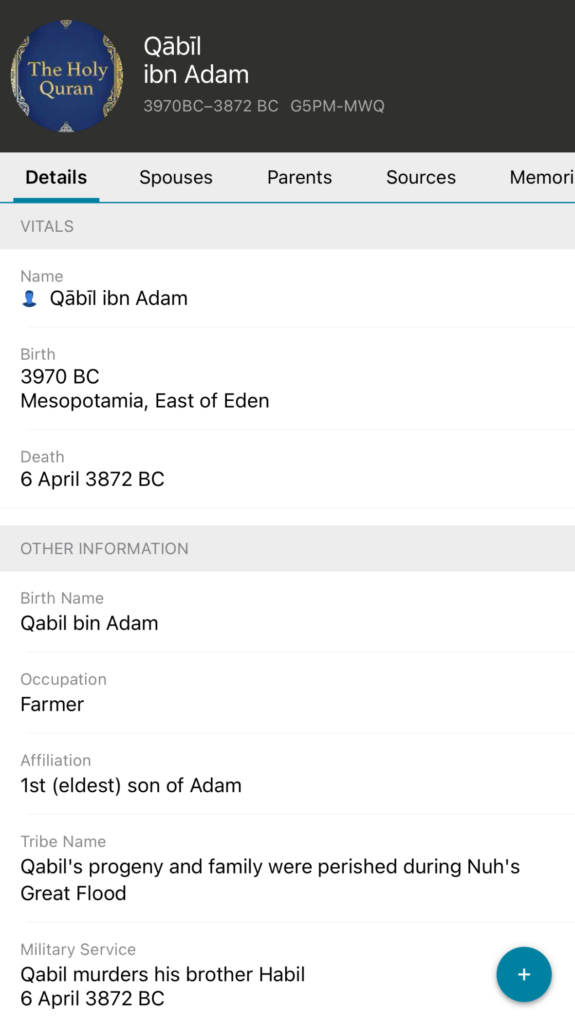
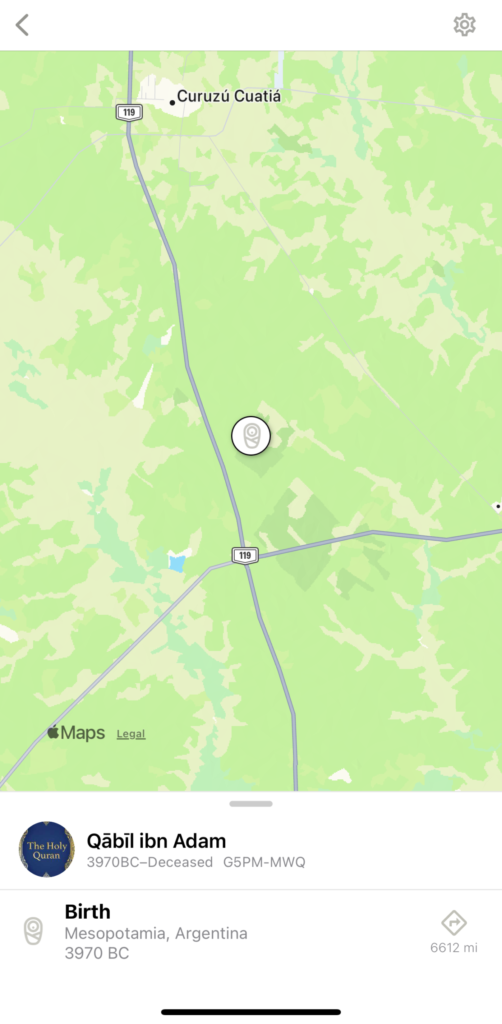
The story of humanity begins with creation and unfolds through land, lineage, and moral consequence. From the first human being formed from the earth to the first recorded act of violence between brothers, the human story is rooted in both place and relationship. In this framework, Adam represents the origin of humanity, while the account of his sons marks the beginning of human conflict. Mesopotamia—“the land between rivers”—stands as a defining geography of origin, settlement, and movement. In the context of South America, Mesopotamia (Argentina) reflects this same pattern: a region shaped by water, sustaining life, and carrying the continuity of human presence across generations.
✋🏿 Creation and Origin of Humanity
“And We did certainly create man out of clay from an altered black mud.”— Al-Ḥijr (The Rocky Tract) 15:26
This verse establishes the material origin of humanity and frames the beginning of human presence on earth within a created, intentional design. It introduces the relationship between human beings and the land itself—a connection that continues throughout the narrative of creation, movement, and settlement.
🌿✋🏿 Ādam in the Garden
✋🏿 Creation of Ādam and Humanity
The Qur’an repeatedly reminds humanity that its origin is inseparable from the earth itself. Human beings are described as having been created from black mud, drawn directly from the land — Al-Ḥijr (The Rocky Tract) 15:26.
In this way, the Qur’an presents the bond between mankind (insān, human being) and the earth as fundamental and unbroken—a cycle of creation, existence, and return that ties human identity directly to the land from which it came.
This origin establishes an intrinsic bond: to be human is to be of the land. The land is not merely an environment we inhabit; it is the substance from which we were formed.
“From it We created you, and into it We will return you, and from it We will bring you forth once more” — Ṭā Hā (Ta Ha) 20:55
This cycle of origin and return frames human existence as rooted in the earth itself.
🌳 Placement in the Garden
“And We said, O Adam, dwell, you and your wife, in the Garden and eat from wherever you will, but do not approach this tree, lest you be among the wrongdoers” — Al-Baqarah (The Cow) 2:35
Ādam and his wife were placed in a garden of provision and ease, with freedom to enjoy what was within it, except for a single restriction.
⚠️ The Test
“But Satan caused them to slip out of it and removed them from that condition in which they had been” — Al-Baqarah (The Cow) 2:36
The Qur’an presents the garden as a place of testing, where choice and obedience are central.
🌍 Descent to the Earth
“We said, Descend, all of you, from it. And when guidance comes to you from Me, whoever follows My guidance—there will be no fear concerning them, nor will they grieve” — Al-Baqarah (The Cow) 2:38
The descent marks the beginning of human life upon the land—where settlement, movement, and civilisation unfold.
“Have those who disbelieved not considered that the heavens and the earth were a joined entity, and We separated them and made from water every living thing?” — Al-Anbiyāʾ (The Prophets) 21:30
🧭 Meaning and Continuity
The account establishes a clear sequence:
- creation from the earth
- placement in the garden
- a test of obedience
- descent to the land
🧩 Summary
The Qur’an presents the account of Adam as:
- as a Black man, created from Black mud (the earth, soil)
- the beginning of human existence
- a test of guidance and choice
- the transition from garden to earth
It establishes the foundation of the human journey—from creation, to testing, to life upon the land.
🌍 The Garden of Eden — East of Eden
The phrase “east of Eden” evokes exile, migration, and the long unfolding of human civilisation beyond its place of origin. While rooted in the biblical narrative, it also reflects the spread of human societies across the earth.
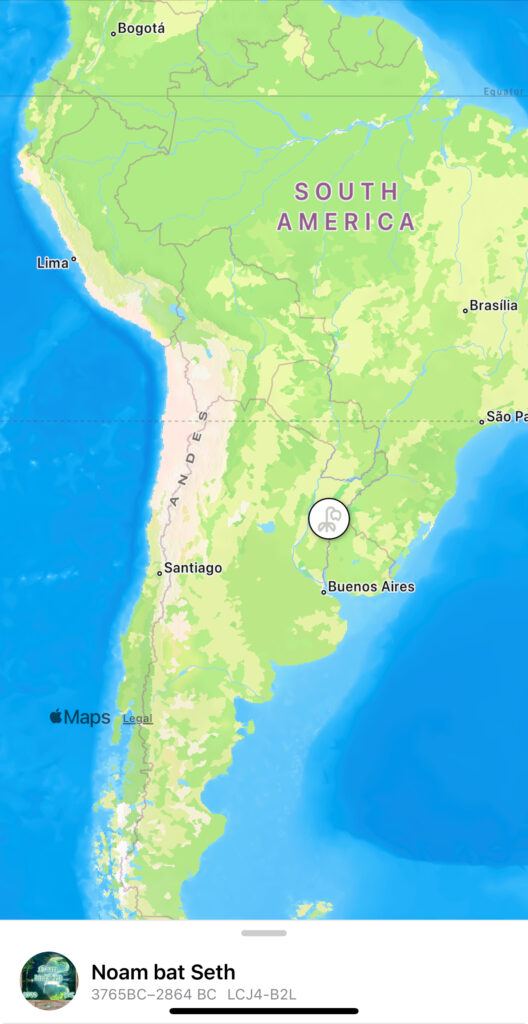
From the fertile landscapes of Mesopotamia (Argentina), South America, to the Great Plains of North America and British Columbia, Canada, this movement reflects adaptation, innovation, and continuity.
🌎 Mesopotamia (Argentina)
This region lies between major rivers and includes the provinces of Entre Ríos, Corrientes, and Misiones.
The region of Argentine Mesopotamia is defined by water: river systems, wetlands, and fertile landscapes.
“And He has spread out the earth for creatures…” — Ar-Raḥmān (The Most Merciful) 55:10
🌊 Major rivers in Mesopotamia (Argentina)
- Paraná River
One of South America’s largest rivers, shaping transport, agriculture, and settlement.
“And We made from water every living thing…” — Al-Anbiyāʾ (The Prophets) 21:30
- Uruguay River
Forms the eastern boundary and supports movement and trade.
“And He placed within the earth rivers and roads that you might be guided” — An-Naḥl (The Bee) 16:15
- Iguazú River
A major tributary of the Paraná River, forming the Iguazú Falls.
The region includes areas of global significance, such as Iguazú National Park in Misiones Province, a UNESCO World Heritage Site.
“And We send down from the sky water in measure…” — Al-Muʾminūn (The Believers) 23:18
- Paraguay River
Flows into the Paraná River and shapes the wider basin.
“And it is He who spread the earth and placed therein firmly set mountains and rivers…” — Ar-Raʿd (The Thunder) 13:3
🌿 Other notable rivers
Salado River (in Entre Ríos)
Gualeguay River
Aguapey River
These rivers contribute to local drainage systems, wetlands, and agricultural irrigation.
“And in the earth are signs for those who are certain” — Adh-Dhāriyāt (The Winnowing Winds) 51:20
🧭 Why it is called “Mesopotamia”
“Land between rivers.”
This is not symbolic—it is literal, geographical, and lived.
“And the earth — We have spread it out and cast therein firmly set mountains…” — Al-Ḥijr (The Rocky Tract) 15:19
🌊 Landscape Overview
The region is characterised by:
- extensive river networks
- wetlands and floodplains
- subtropical forests
- seasonal water variation
Water defines the land. The land defines settlement.
🧩 Summary
- Paraná and Uruguay systems
- tributary networks
- wetland ecosystems
- water-shaped geography
“The creation of the heavens and the earth is greater than the creation of mankind…” — Ghāfir (The Forgiver) 40:57
🌍✋🏿 Signs Across the Land
The Qur’an consistently presents the natural world as a system of signs:
“So travel through the earth and observe…” — Al-ʿAnkabūt (The Spider) 29:20
“And in the earth are signs for those who are certain” — Adh-Dhāriyāt (The Winnowing Winds) 51:20
“From it We created you, and into it We will return you…” — Ṭā Hā (Ta Ha) 20:55
🌍✋🏿 How Allah Describes the Land
🌍 The Land as Created and Spread Out (Flat Earth)
“And after that He spread the earth…” — An-Nāziʿāt (Those Who Drag Forth) 79:30
⛰️ The Land Stabilised by Mountains
“And We placed within the earth firmly set mountains, lest it should shift…” — Al-Anbiyāʾ (The Prophets) 21:31
🌊 The Land Containing Rivers and Pathways
“And He placed within the earth rivers and roads…” — An-Naḥl (The Bee) 16:15
🌧️ The Land Revived by Water
“And We send down from the sky water in measure and We revive thereby a dead land…” — Az-Zukhruf (The Ornaments of Gold) 43:11
🌱 The Land as a Source of Provision
“And He placed firm mountains in it and blessed it and determined therein its sustenance…” — Fuṣṣilat (Explained in Detail) 41:10
🧭 The Land as Pathways and Movement
He who made for you the earth as a bed and inserted therein for you roadways… — Ṭā Hā 20:53
🧠 The Land as Signs for Reflection
And in the earth are signs for those who are certain. — Adh-Dhāriyāt (The Winnowing Winds) 51:20
🔁 The Land as Origin and Return
From it We created you, and into it We will return you… — Ṭā Hā 20:55
⚠️✋🏿 The Warning of Iblis and the Descent of Adam
And [mention] when We said to the angels, “Prostrate to Adam,” and they prostrated, except for Iblis. He was of the jinn and departed from the command of his Lord. Then will you take him and his descendants as allies instead of Me while they are enemies to you? Wretched is the exchange for the wrongdoers… — Al-Kahf (The Cave) 18:50
This establishes Iblis as a persistent adversary to humanity. His refusal becomes a lasting mission to mislead mankind.
Adam and his spouse are warned, yet deceived. Their descent to earth marks not a permanent curse, but the beginning of human responsibility.
The account emphasises:
- danger of pride
- reality of temptation
- possibility of repentance and guidance
The Garden of Eden in the Qur’an and Genesis
Both the Qur’an and Genesis describe Eden as a place of origin, testing, and descent.
In Genesis:
- Eden is a physical garden
- disobedience introduces sin and separation
In the Qur’an:
- the garden is a place of testing
- Adam repents and is forgiven
- no inherited sin is carried forward
The difference is theological:
- Genesis emphasises original sin
- the Qur’an emphasises accountability and mercy
Both portray Eden as a transition from innocence to responsibility, establishing the foundation of human existence on earth.