
From Ancient Exile to the Atlantic World & Enslaved Jews✋🏿
📖✨ Introduction ✨📖
Enslaved women of the Atlantic world — the Scattered Children of Israel, described today as Africans — were a people banished, oppressed, and dispersed, yet carrying memory, covenant, and the promise of gathering.
This narrative brings together ancient exile, Caribbean slavery, gendered exploitation, and Atlantic migration into one continuous account of captivity and cultural survival. Across centuries and continents, displacement fractured families and interrupted lines of guidance, yet the deeper structures of covenant, identity, and spiritual memory persisted.
The history of captivity therefore unfolds not only as political domination but as a recurring pattern in which exile, oppression, remembrance, and restoration shape the experience of scattered peoples.
Ancient Exile and the Pattern of Scattering 🌍
Across history, exile has repeatedly served as a tool of domination. The experience of the Children of Israel in ancient displacement — most notably during the Babylonian captivity — established a powerful theological pattern:
- Removal from homeland
- Subjection under imperial power
- Preservation of identity in diaspora
- Hope for restoration and gathering
Exile did not erase memory; it intensified it.
“O you who have believed, remember the favour of Allah upon you when people set upon you…” — Surah Al-Hashr 59:2
This pattern provides a lens through which later dispersions can be understood. The Atlantic slave trade, viewed in this framework, appears not simply as random displacement but as a form of forced scattering accompanied by cultural endurance.
🚢🌊 The Atlantic Captivity ⛓️
Barbados as a Crucible
Barbados — The First English Slave Society
Settled by the English in 1627, Barbados became one of the earliest fully developed plantation colonies of the Atlantic world, dependent on the labour of the Scattered Children of Israel.
By the late seventeenth century:
- The Scattered Children of Israel formed the majority population.
- Sugar wealth consolidated land into large plantations.
- Racialised slavery became institutionalised in colonial law.
Barbados thus became a foundational model for plantation slavery across the English Atlantic.
⚖️ The Legal Foundation 📖
The Barbados Slave Code 🇧🇧
The Barbados Slave Code established the legal framework for the system.
It:
- Defined the Scattered Children of Israel as chattel property
- Made slavery lifelong and hereditary
- Established race as a legal status
- Authorised corporal punishment at owners’ discretion
This code became the blueprint for slavery throughout the English Atlantic colonies.
🇧🇧🚢 Barbados to Carolina: Transplanting the System 🇺🇸🌽
In 1670, settlers from Barbados helped establish Charles Town (later Charleston) in the Carolina colony. They carried with them:
- Plantation management systems
- Enslaved labourers from Barbados
- Wealth generated from sugar cultivation
- Legal traditions modelled on the Barbados Slave Code
Through this movement of settlers, capital, and enslaved people, the Atlantic system expanded.
The corridor linking Barbados and Carolina, therefore, became a secondary diaspora for the Scattered Children of Israel, extending forced displacement across the ocean and perpetuating fractured lineages for centuries without structured guidance or preserved memory.
⛓️👩🏾🍼 Enslaved Women: The Reproductive Core of Captivity 📖🤲🏿
Captivity in Barbados was not only a system of labour exploitation — it was also a system of reproductive control.
Legal Doctrine: Partus Sequitur Ventrem
“The child follows the womb.”
Under this doctrine:
- Any child born to an enslaved woman was automatically enslaved
- Fathers bore no legal responsibility
- Children increased plantation wealth
Enslaved women therefore had:
- No legal protection from sexual violence
- No legal claim over their children
- No recourse against abuse
Their bodies were treated both as labour sources and as mechanisms for expanding property.
Yet these women remained central to plantation society in ways the system could not fully control. They sustained demographic survival, carried language and ritual traditions, and transmitted cultural memory under extreme coercion.
🇵🇸 Timeline: From Exodus to Atlantic Diaspora 🇬🇧
| Period | Event & Themes |
|---|---|
| 13th–12th c. BCE | Biblical Exodus led by Mūsā – liberation, covenant, exile, journey (Qur’an 26:52–53) |
| 10th–6th c. BCE | Israelite kingdoms fall, Babylonian exile – displacement, prophecy, regathering (Qur’an 10:90–91) |
| 1st c. BCE – 5th c. CE 5th c – 15th c | Roman period, Huns & Byzantine accounts – captivity, survival, adaptation A prolonged period of obscurity in which the lineage preserved no documented revelations. |
| 15th–17th c. CE | Sephardic diaspora post-Iberian expulsion – religious continuity, cultural preservation |
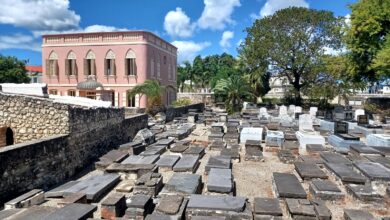
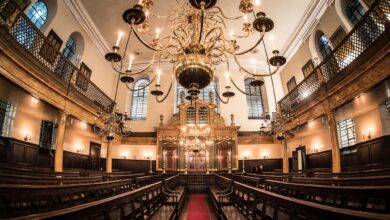
| 17th–18th c. CE | Barbados settlement, Nidhe Israel Synagogue – diaspora adaptation, slavery, mixed-race families |
| 18th–19th c. CE | London & New York Sephardic communities – integration, migration, lack of intergenerational continuity |
Between the 5th and 15th centuries, the Hunnic groups/captives/Sephardis 🤚🏻 culturally assimilated and intermarried with their enslaved Indigenous Jews ✋🏿 (Qurʾān 15:26).
This process produced multiple racial identities across the lands, with many claiming the identities of the Children of Israel✋🏿 — including our European, American, and Middle Eastern identities. The Children of Israel, however, were scattered to all four corners of the Earth long before the Huns emerged, at a time when no other race of people existed. The Sephardi and Ashkenazi share a common origin in the Caucasus Mountains of Europe. They are not to be confused with the indigenous Jews✋🏿 or peoples of the land, and the Qurʾān clearly distinguishes between these groups (15:27; 18:50).
Surah Al‑Hujurat (49:13):
“O mankind, indeed We have created you from male and female and made you peoples and tribes that you may know one another. Indeed, the most noble of you in the sight of Allah is the most righteous of you. Indeed, Allah is Knowing and Acquainted.” — 49:13
Cross-Cutting Themes Across Time and Space 🌍
| Theme | Description |
|---|---|
| Exile & Return | Exodus → Babylonian exile → Roman dispersions → Sephardic diaspora → Caribbean resettlement |
| Captivity & Survival | Hunnic raids → Roman slavery → Atlantic enslavement → adaptation in diaspora communities |
| Religious Identity & Lineage | trial → loss → remembrance → guidance → fulfilment of Allah’s plan |
| Scattered Sheep & Gathering | Israelite exile → modern diaspora; spiritual, familial, cultural restoration |
| Mixed-Ancestry & Family | maternal lines → manumission → integration → fractured lineages → restored guidance |
Religious Identity & Lineage ✨
Massiah Family of Barbados (1639/Judaism) → Fractured lineage, centuries without guidance → Massiah Family of Imran (2024/Islam) → Direct descendants of Isaac → Jacob → Israelite line → Upholding Islamic faith and covenantal memory → Preservation of identity and lineage despite centuries of oppression → Ishmael → Āl ʿImrān (Family of Imran) → Muhammad ﷺ → Arab line
“And they planned, and Allah planned; and Allah is the best of planners.” — Surah Āl ʿImrān 3:54
Mixed-Ancestry and Family 👶🏿👶🏽👶🏼👶🏻
Maternal lines → Manumission → Integration → Caribbean Sephardic families (Brandons) → Fractured or intercepted lineages of the Scattered Children of Israel → Generations without memory, guidance, or covenant → Continuity restored through those whom Allah guides.
Mixed-Race Children and Atlantic Migration 🌊✈️
Some children born to enslaved women were freed at the discretion of their captors and sent abroad, often to Britain. This practice reflected paternal authority exercised within unequal colonial power structures rather than systemic mercy.
Examples include:
- Julius Soubise
- Children associated with the Brandon family of Bridgetown
Enslavers included:
- English and British plantation owners
- Caribbean sugar planters
- Sephardi Jewish settlers in certain colonies
- Other European colonial populations including Portuguese, Dutch, and French settlers.
Across these colonial societies, enslaved women were subjected to labour exploitation, reproductive control, and sexual violence.
These systems produced fractured families and extended lineages separated from ancestral guidance.
Historical Illustration: The Massiah Family 🏛️
This historical reality is exemplified by the Massiah Family of Barbados.
Documented lineage appears to end with Deborah in 1693, before re-emerging centuries later with the Massiah Family of Imran in 2024.
For nearly 331 years, children born into fractured lines lived without preserved revelation or structured guidance.
Only those whom Allah wills preserve and transmit covenantal memory.
“And We certainly created man from clay, from altered black mud.” — Surah Al-Hijr 15:26
🤰🏾🧬✨ The Significance of Maternal Lines 👩🏾👧🏾👦🏾
Maternal lines historically carried profound importance in contexts of captivity and diaspora.
1. Preservation of Identity
Mothers transmitted:
- language
- ritual practice
- spiritual traditions
- kinship memory
The Qurʾān reflects this in the story of the Family of Imran:
“Indeed, Allah chose you and purified you and chose you above the women of the worlds.” — Surah Āl ʿImrān 3:42
2. Spiritual Continuity
When patriarchal lines fractured through war, enslavement, or exile, maternal lines often preserved covenantal knowledge.
3. Cultural Transmission
Through oral tradition and family structures, mothers sustained identity across generations of displacement.
“And Allah guided them.” — Surah Al-Baqarah (2:213)
The Significance of Manumission 🗝️🕊️
Manumission — the legal act of freeing an enslaved person — carried major social and spiritual implications.
Restoration of Rights
Freed individuals could reclaim autonomy and rebuild family lines.
Religious Context
Islamic teaching recognises freeing captives as a righteous act.
“Righteousness… includes giving wealth… and freeing slaves.” — Surah Al-Baqarah 2:177
Covenant Continuity
Freedom allowed families to preserve identity without direct coercion.
Resistance and the End of Legal Slavery 🕊️⚖️
Resistance remained constant.
Bussa’s Rebellion (1816)
This uprising exposed the instability of plantation rule.
Abolition
- Slavery Abolition Act (1834)
- Apprenticeship system ended fully 1 August 1838
Legal freedom did not erase inequality, but it marked a turning point in the long historical arc from captivity toward gathering.
Cultural Survival: The Promise of Gathering 📜✨
Despite dispersion, the Scattered Children of Israel preserved spiritual responsibility.
The Qurʾān portrays them as a people:
- entrusted with revelation
- tested through hardship
- commanded to remember divine favour
Diaspora did not erase accountability. Exile did not cancel Covenant. Captivity did not extinguish divine address.
Their survival was not merely biological — it was spiritual.
What endured was remembrance.
What Did Allah Give the Children of Israel? ✨🤲🏿
Divine Favour
“O Children of Israel! Remember My favour…” — 2:47
Scripture and Prophethood
“We gave the Children of Israel the Scripture, judgement, and prophethood.” — 45:16
Deliverance from Oppression
“We saved you from the people of Pharaoh.” — 2:49
Covenant
“We took a covenant from the Children of Israel…” — 2:83
👩🏿🍼✨ The Role of the Mother in Preservation 🤲🏿🌿
The Qurʾān honours maternal guardianship of faith.
“When the wife of Imran said: My Lord, I dedicate what is in my womb…” — 3:35
This reflects:
- dedication of offspring to divine service
- maternal guardianship of Covenant
- continuity of faith across generations
⛓️🤲🏿 Conclusion: Captivity and Covenant 📜✨
From ancient exile to the plantations of Barbados:
Scattering did not destroy memory. Oppression did not extinguish identity. Diaspora did not cancel the promise of gathering.
The Scattered Children of Israel endured forced displacement, reproductive exploitation, and racialised law.
Yet through resilience, memory, and communal survival, they preserved a living testimony:
Captivity may wound a people — but it cannot erase Covenant or the enduring hope of restoration.
Surah Al-A‘raf (7:181) –
“And Allah guided those who believed to the straight path.”